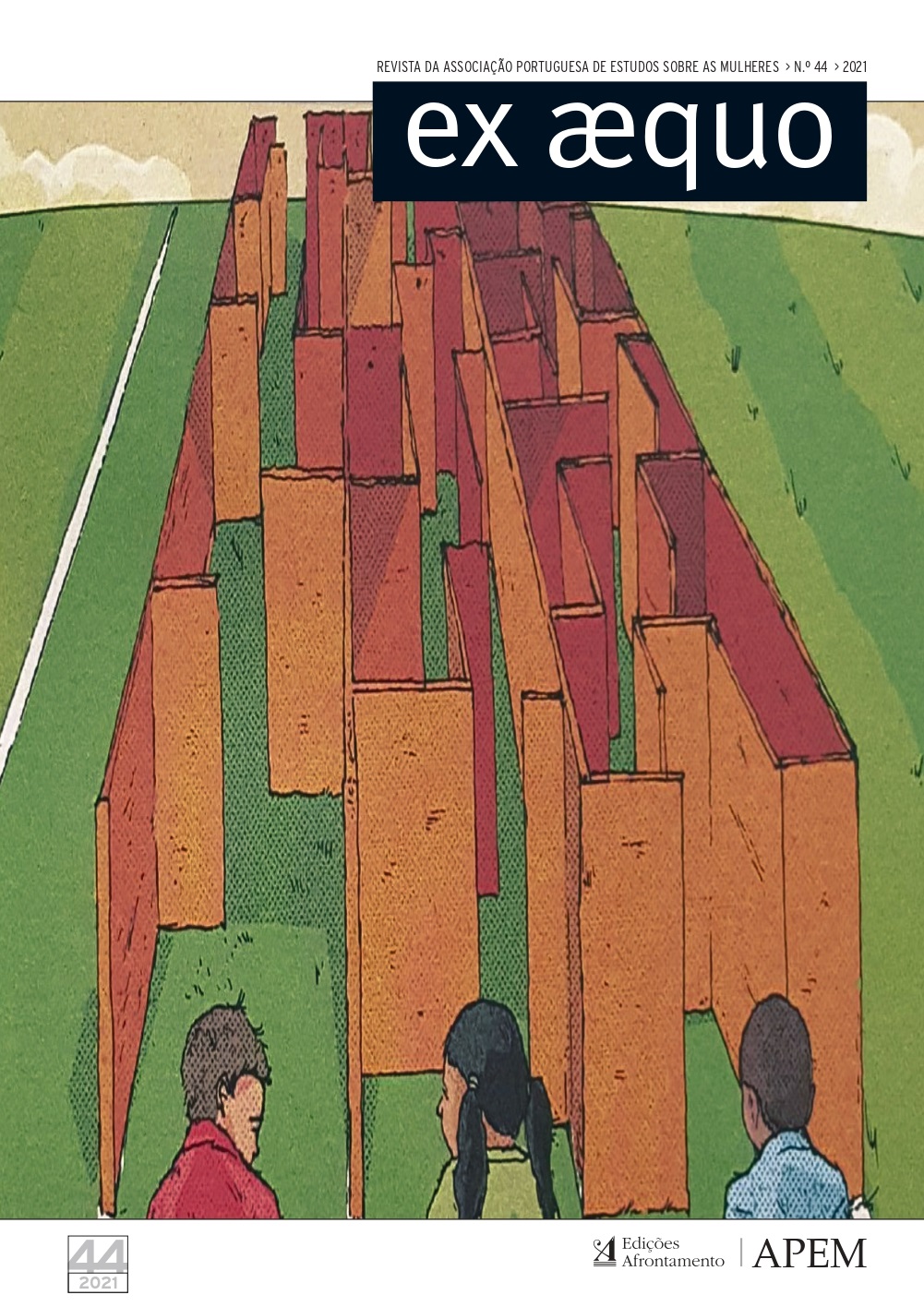
LGBTI+ Freedom Zones? Practices and grammars for an inclusive professional intervention with LGBTI+ children and young people
DOI:
https://doi.org/10.22355/exaequo.2021.44.09Keywords:
student mobility, Brazil-Portugal, coloniality of power, intersectionalityAbstract
Towards a Postcolonial/Decolonial Critique of Social Relations in Academic Context: Voices of Brazilian female students
Experiences in internationalization and student mobility have been increasing, albeit in a very asymmetric way between countries. Portugal has welcomed students from different geographical origins, with the presence of Brazilians in higher education being particularly expressive. In regard to female students, this study reveals that social and academic relationships are not permeated only by gender stereotypes. In a broader and deeper critical analysis, postcolonial/decolonial theoretical concepts (such as coloniality of power) and intersectional methodology allow us to perceive subalternity conditions in the complex interaction of ethnic-racial, gender and national identities.